
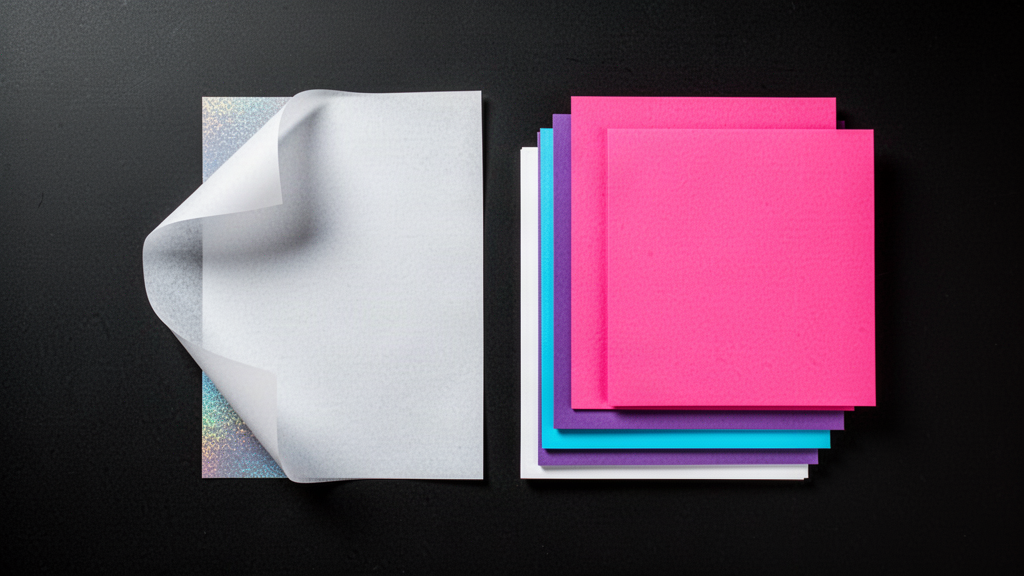
Have you ever gone shopping for paper and found yourself staring at labels like 20 lb, 65 lb and 110 lb, wondering if you accidentally wandered into a gym?
Same. Paper has a whole personality, and apparently it comes with its own math problem. But once you know a few basics, picking the right sheet for your project gets a whole lot easier.
Let’s break down printer paper, cardstock and those mysterious pound numbers, without making this feel like a pop quiz.
Printer paper vs. cardstock: What’s the difference?
Regular printer paper is generally lighter and more flexible. It’s your everyday multitasker: great for notes, worksheets, drafts and those documents you swear you’ll organize later. Many home and office printers use 20 lb bond paper as their standard copy paper.
Cardstock is generally heavier and sturdier. It has more body, so it’s a popular choice for invitations, greeting cards, tags, signs and other projects that need to hold their own. Think of printer paper as your comfortable everyday outfit and cardstock as the structured jacket that makes the whole look feel finished.
Neither one is automatically better. A planner page needs to turn easily; a party invitation might need a little more presence. The best paper depends on what you’re making.
What does “lb” actually mean on paper?
The pound number is called the basis weight. In the U.S., it refers to how much 500 sheets of a particular type of paper weigh at that type’s standard, uncut size. Those standard sizes differ by paper type.
So no, a package of 20 lb printer paper doesn’t necessarily weigh 20 pounds, and a bigger number doesn’t always mean a heavier sheet when you’re comparing different types of paper. Paper really said, “Let’s make this interesting.”
Here’s the plot twist: 80 lb text paper is lighter than 65 lb cover cardstock. They’re measured using different standard sheet sizes. That’s why the word after the number matters. Look for labels such as bond, text, cover or index, not just the pounds.
Meet GSM: the easier comparison
GSM stands for grams per square meter. It measures the weight of paper over a consistent area, which makes it useful for comparing different types of paper. In general, a higher GSM means a heavier sheet.
For example, 80 lb text paper is about 118 GSM, while 65 lb cover cardstock is about 176 GSM. The cardstock has the lower pound number but the higher GSM. Mystery solved, glitter optional.
One more thing: weight and thickness aren’t exactly the same. Two papers with the same GSM can feel different because of their fibers and how they’re made. If you’re choosing paper for a special project, a sample is your best friend.
Common printer paper weights
These are approximate GSM conversions for bond paper. Different paper types use different pound scales.
- 20 lb bond (about 75 GSM): Everyday copy paper. Handy for notes, draft prints, worksheets and routine documents.
- 24 lb bond (about 90 GSM): A step up with a more substantial feel. Nice for letters, handouts and planner pages when you want something a little sturdier.
- 28 lb bond (about 105 GSM): A heavier option for presentations, special handouts or printable pages where you want a more substantial sheet.
- 32 lb bond (about 120 GSM): Heavier paper that can work nicely for polished documents and some colorful printables. It’s still a different category from most cover cardstock.
For writing, test your favorite pens before printing a whole stack. Paper finish, ink and pen type can all affect how a page feels and whether ink shows through.
Common cardstock weights
These examples use cover weight. Cardstock can also be sold under other categories, so check the complete label and GSM.
- 65 lb cover (about 176 GSM): Lightweight cardstock with a little flexibility. A useful starting point for craft projects, tags and lightweight cards.
- 80 lb cover (about 216 GSM): A popular middle ground for invitations, greeting cards and projects that need a sturdier feel.
- 100 lb cover (about 270 GSM): A heavier choice for substantial invitations, covers and presentation pieces. Check your printer’s specifications before using it at home.
- 110 lb cover (about 298 GSM): A very sturdy option for projects that need extra body. It may be too heavy for some home printers, so check your printer’s limits or consider a print shop.
Watch the labels: 110 lb index is about 199 GSM, while 110 lb cover is about 298 GSM. Same number, different paper category, very different weight. Those little words are doing important work.
Which paper should you choose?
Here’s a practical starting point. The finish, feel and printer compatibility of individual papers can vary, so test a sheet before committing to a full project.
- Planner pages, journal inserts and worksheets: Try 24 lb or 28 lb bond if you want a step up from standard copy paper while keeping pages flexible.
- Drafts and everyday documents: 20 lb bond usually gets the job done without using your fancy paper for a grocery list. Unless that grocery list deserves luxury. We don’t judge.
- Invitations and greeting cards: Start by comparing 65 lb and 80 lb cover. Go heavier if you love the feel and your printer or print shop can handle it.
- Party signs, tags and covers: Consider a sturdier cover stock, such as 80 lb or 100 lb, depending on how the piece will be used.
Before you put cardstock in your printer
Your printer may love cardstock. It may also respond to a heavyweight sheet like you’ve asked it to climb a mountain. Either way, check first.
- Check your printer’s specifications. Look for the supported paper weights and sizes, and use the feed path recommended by the manufacturer.
- Choose the right print settings. If your printer offers a cardstock or heavy-paper setting, use the one appropriate for your sheet.
- Make sure the paper matches your printer. Check whether it’s suitable for inkjet, laser or both, especially with coated or specialty finishes.
- Print a test sheet. Check color, alignment and drying time before you print the whole stack.
- Score before folding. If you’re making a folded card, scoring heavier cardstock first can help create a cleaner fold.
The bottom line: Pick the paper that fits the vibe
Printer paper keeps everyday projects easy and flexible. Cardstock brings extra structure when you want your invitation, card or tag to make an entrance. And when the pound numbers get confusing, check the paper type and compare the GSM.
Your paper doesn’t have to be boring just because the label looks like homework. Pick a sheet that works for your project, test it with your printer and let your creativity do the rest. That’s how you plan pretty and print pretty.
For more paper-weight comparisons, see Neenah’s paper basis weight chart.
